Showing posts with label Freaky toxin. Show all posts

Sunday, 30 August 2015

Creature 334: Ixodes holocyclus


A scary tick

Ixodes holocyclus is commonly known as the paralysis tick.

Tick before and after feeding.jpg

Paralysis ticks will usually not usually cause serious side effects in humans, but on occasion the neurotoxin they produce can cause serious symptoms which are similar to anaphylaxis. It can also cause muscle weakness, which if the tick is not removed will eventually progress to full blown paralysis. In extreame cases the tick can kill its host.

Distribution:
Paralysis ticks can be found along the east coast of Australia between the ocean and the great dividing range.

Classification:
Kingdom: Animalia
Phylum: Arthropoda
Class: Arachnida
Order: Acari
Family: Ixodidae
Genus: Ixodes
Species: Ixodes holocyclus

Image Links:
https://en.wikipedia.org/wiki/Ixodes_holocyclus

Monday, 24 August 2015

Creature 328: Heracleum mantegazzianum


A plant that makes you act like a vampire

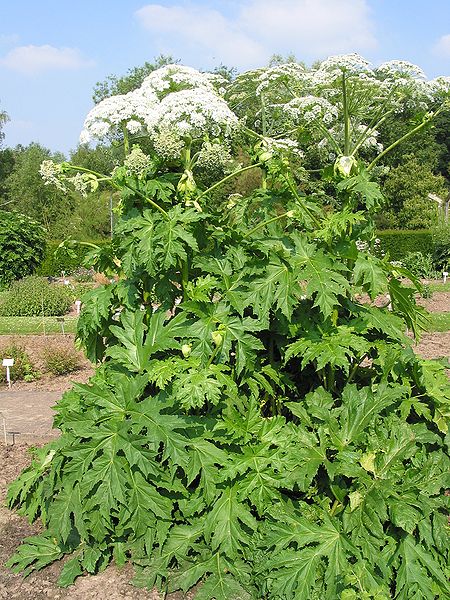
Heracleum mantegazzianum is commonly known as giant hogweed or many other names, most of which sound quite nasty.
File:Heracleum mantegazzianum (Meise) JPG1a.jpg
It grows up to 5.5 meters tall and has a pretty nasty toxic defense. Unlike most plants, this thing doesn't need to wait until you eat it to poison you. If it comes in contact with your skin a chemical sticks to you. When that chemical is exposed to sunlight it starts reacting and causes severe irritation and burns to your skin. It is not fatal but in some cases hospitalizations might be necessary.
The sap of giant hogweed can cause severe burns on the skin.

Distribution:
The giant hogweed is native to central Asia but for some reason I will never understand we have introduced it into several other areas.

Classification:
Kingdom: Plantae
Phylum: Angiosperms
Class: Dicotyledon
Order: Apiales
Family: Apiaceae
Genus: Heracleum
Species: Heracleum mantegazzianum

Images Links:

Tuesday, 30 June 2015

Creature 273: Plectaster decanus

Look, don't touch.

Plectaster decanus is a seastar commonly known as the mosaic seastar.


It is renowned for it bright coloration and distinct tile like patterns. But that coloration is there as a warning. These seastars are poisonous. There is a substantial amount of poison in the mosaic seastars skin and it can cause a human's limb to go numb just by holding it.

Distribution:
The mosaic sea star can be found off the coast of temperate Australia at depths of 5 to 200 m

Classification:
Kingdom: Animalia
Phylum: Echinodermata
Class: Asteroidea
Order: Spinulosida
Family: Echinasteridae
Genus: Plectaster
Species: Plectaster decanus

Image Links:

Thursday, 18 June 2015

Creature 261: Harphaphe haydeniana

A millipede with a toxic gas defense.

I don't often post about millipedes, because most of them are not that interesting. Harphaphe haydeniana is an exception.


Harphaphe haydeniana goes by many common names. It can be called the night train millipede,  the clown millipede,  the yellow spotted millipede, the almond millipede or the cyanide millipede. Hopefully the picture alone will shed some light on some of these common names, others can be explained by the toxic gas they exude.


When they are threatened they produce Hydrogen Cyanide gas, which is toxic to almost every living thing. This is where the name Cyanide millipede and Almond millipede comes from. Wild almonds also produce Hydrogen Cyanide gas when handled,  so the two smell very similar, but the almonds are a subject for a later post. Suffice it to say that a millipede which gives off deadly gas is a pretty cool millipede. The cyanide millipede does not produce enough poison to kill a human, however if you ate a few you would be in trouble.

Distribution:
Cyanide millipedes can be found along the entire West coast of North America.

Classification:
Kingdom: Animalia
Phylum: Arthropoda
Class: Diplopoda
Order: Polydesmida
Family: Xystodesmidae
Genus: Harpaphe
Species: Harphaphe haydeniana

Image Links:

Saturday, 6 June 2015

Creature 249: Glyptapanteles

Caterpillar brainwashing
Glyptapanteles is a genus of parisitoid wasps, and we all know how much fun they can be.

Female wasps lay their eggs inside certain caterpillar species. The juvenile wasps grow inside the caterpillar feeding off it but not damaging it too severely. The caterpillar behaves normally as the wasps develop. Once they are ready to enter their cocoon phase the wasps burrow out of the caterpillar and build their cocoons.


But one or two juvenile wasps sacrifice themselves and stay behind to take care of things. Once the others have left  altering the brain of the caterpillar making it stand guard over the cocoons of the other wasps. The caterpillar will even cover the cocoons in protective silk, but mostly it just stays still over the top of the cocoons. If anything touches the caterpillar it springs into action doing everything it can to scare or fight off the potential predator. The caterpillar will eventually die of starvation as in its new brainwashed state it has no desire to eat. Watch it happen here.


Distribution:
Glyptapanteles are endemic to the Americas

Classification:
Kingdom: Animalia
Phylum: Arthropoda
Class: Insecta
Order: Hymenoptera
Family: Braconidae
Genus: Glyptapanteles

Image Links:

Video Links:

Monday, 1 June 2015

Creature 244: Ricinus communis

The most deadly plant in the world?

Ricinus communis is commonly known as the Castor oil plant.

It is a widely cultivated garden plant and is kept for it beauty despite the fact that it is very deadly. According to the Guinness book of records it is the most deadly plant in the world,  however this is debatable.

The beans of the plant carry a toxin called ricin, the same one made famous in Breaking Bad. Eight beans are said to be enough to kill most people. The toxin ricin interferes with protein synthesis. Basically it stops almost every metabolic process in your body and you slowly die. The poison normally  kills within a week. Ricin is not undetectable and it is not untreatable.  If treatment is available the patient will usually survive. The symptoms vary from case to case but they can be a lot more severe than they seem to be in breaking bad. It is fairly hard to detect if you don't know what to look for.


Distribution:
The Castor oil plant is native to North East Africa and India but grows wild throughout the tropics and is widely cultivated.

Classification:
Kingdom: Plantae
Phylum: Angiosperms
Class: Dicotyledon
Order: Malpighiales
Family: Euphorbiaceae
Genus: Ricinus
Species: Ricinus communis

Image Links:

Monday, 25 May 2015

Creature 237: Paraponera clavata

The most painful ant sting

Description: 
Paraponera clavata is known as a bullet ant, as its sting feels like you have been shot.


It has the highest pain ranking in the Schmidt index, which is designed for Hymenopteran bites and stings. Their sting contain a paralytic toxins known as Poneratoxins. Some tribes in Brazil use them in an initial rite as young men are required to stick their hand in a glove full of bullet hands and leave it on for 10 minutes. Their hand becomes paralysed and they might be shaking for days afterwards.


Distribution:
Paraponera clavata is endemic to Central America.

Classification:
Kingdom: Animalia
Phylum: Arthropoda
Class: Insecta
Order: Hymenoptera
Family: Formicidae
Genus: Paraponera 
Species: Paraponera clavata 

Image Links:
http://en.wikipedia.org/wiki/Paraponera_clavata
http://www.myrmecos.net/2011/02/28/paraponera-clavata-the-bullet-ant/

Friday, 17 April 2015

Creature 199: Pitohui

Poisonous birds
Description:
Pitohui is a genus of 2 species of birds.


When you think of poisonous animals you do not usually think bird probably because birds usually rely on their ability to fly as a defence. The Pitohui are different. They are one of the few birds in the world which are toxic. Pitohui  don't produce their own poison but sequest it from various insects in their diet. The poison is a neurotoxin and it accumulates in their skin and feathers. One of these birds is toxic enough to kill you within seconds of the poison reaching the circulatory system, but they don't have a delivery method. Not only is the bird highly toxic if eaten,  but it causes severe irritation when handled.


Distribution:
Pitohui are endemic to New Guinea.

Classification:
There are several species which have previously been included in this genus, but have been moved to other genera, sometimes other families.
Kingdom:Animalia
Phylum:Chordata
Class: Sauropsida
Order: Passeriformes
Family: Oriolidae
Genus: Pitohui

Tuesday, 14 April 2015

Creature 196: Calcarifera ordinata


A cool looking caterpillar
Description:
Calcarifera ordinata is a species of moth. The adult has no common name that I am aware of but the juvenile is known as a wattle cup caterpillar.

The adult is mostly light brown with a few cool markings, but nothing to write a blog post about.
The juvenile looks a lot more interesting.  It is covered in a variety of fine colour markings. It also carries four pairs of thorn like protrusions covered in stinging setae. These setae are venomous and being stung by one of these guys is apparently far worse than your average wasp.


Distribution:
Calcarifera ordinata is mostly found in the Australian tropics with a little overflow into the temperate region.

Classification:
Kingdom: Animalia
Phylum: Arthropoda
Class: Insecta
Order: Lepidoptera
Family: Limacodidae
Genus: Calcarifera
Species: Calcarifera ordinata

Image Links:

Saturday, 4 April 2015

Creature 186: Phyllobates terribilis

The most poisonous animal in the world doesn't produce its own poison.

Description:
Phyllobates terribilis may not look very terrible, but as its common name suggest the golden poison arrow frog is not to be trifled with. It is also known as the golden poison frog or the dart frog.


While this little frog has no delivery method for its toxins, its skin is so poisonous that a single frog's poison can kill up to 10000 mice. Don't eat it! The poison is used by natives to make their notorious poison darts.

Oddly enough the golden poison arrow frog doesn't produce any of its own poison. When held in captivity it will eventually lose the toxins in its skin and become harmless. It is presumed that the frog derives its poison from a major component of its normal diet, but we have been unable to determine exactly where it comes from, although it is probably a species of Merylid beetle as some species are known to produce these toxins, although not in the same concentration.

Distribution:
Phyllobates terribilis is endemic to the Pacific coast of Columbia.

Classification:
Kingdom: Animalia
Phylum: Chordata
Class: Amphibia
Order: Anura
Family: Dendrobatidae
Genus: Phyllobates
Species: Phyllobates terribilis

Image Links:

Sunday, 1 March 2015

Creature 152: Chironex fleckeri

This Jellyfish can kill you 60 times over

Description:
Chironex fleckeri is a type of box jellyfish known as sea wasps due to their excruciatingly painful sting.

Comparing them to wasps is understating their sting, because these nasty Cnidarians can deliver enough venom to kill a person within 3 minutes. There is apparently enough venom in one box jellyfish to kill an adult human 60 times over. It bears up to 60 tentacles which can reach 3 meters long each and is covered in literally millions of stinging cells which will be activated upon contact with your skin. They only hunt during the day. They probably recognize day from night with their clusters of light detecting organs which some people call eyes, however since they lack a brain it is unknown how information from these organs are translated into behavioral changes.


Before you freak out completely, I should point out that most of the time a sting from as sea wasp will only involve the tips of one or two of its tentacles and the pain will quickly warn you to get the hell out of there. Obviously the more venom they inject, the more chance they will kill you and you would need to get stung by more than the tip of a tentacle for it to be lethal. For most of the year sea wasps live in estuine waters and are anchored to the sea floor in what is known as a polyp phase and they only enter their mobile phase (medusa phase) for a few months. The predictable life cycle of the sea wasp makes it easy to avoid them if you want to and a light nylon swimsuit is enough to protect you from a sea wasp sting.

Distribution:
The medusa phase of Chironex fleckeri can be found in tropical waters from Northern Australia to Vietnam and the Philippines.

Classification:
Kingdom: Animalia
Phylum: Cnidaria
Class: Cubozoa
Order: Chirodropida
Family: Chirodropoidae
Genus: Chironex
Species: Chironex fleckeri

Image Links:

Saturday, 7 February 2015

Creature 130: Oxyuranus microlepidotus

The most deadly snake venom in the world.

Description:
Oxyuranus microlepidotus is colloquially known as the Inland Taipan or the Fierce snake.


The Inland Taipan is the most venomous snake in the world. This title is somewhat hard to define, but this is number 1 in terms of the potency of its venom. The venom actually consists of several components which attack multiple organ systems at once and if left untreated will almost definitely kill a human.Despite its incredibly powerful venom there have been no recorded deaths since the advent of its anti venom. This is probably mostly because bites from these snakes are incredibly rare as they only live in the sparsely populated arid regions of North Eastern Australia. They are also fairly shy, spending most of their time in crack within rocks while waiting to ambush the small mammals they they typically prey on. 


Unlike most venomous snakes they will not chase their prey after they have bitten them while waiting for them to die. When an inland taipan strikes it wraps itself around its victim and bites it over and over. For this reason the Inland taipan often doesn't register as the most venomous if venomosity is measured as average venom per bite. This partially explains its need for such a potent venom as they need to kill their prey quickly to minimize the damage they might sustain in a struggle. They can grow up to 2.5 meters long and their coloration changes getting darker in the winter to absorb more heat while fading in the summer to reflect it.

Distribution:
The Inland Taipan is only found in arid regions of northern and central Australia. This is not surprising because Australia has 9 out of the top 10 most venomous snakes in the world and everything is venomous in Queensland.

Classification:
Kingdom: Animalia
Phylum: Chordata
Class: Sauropsida
Order: Squamata
Family: Elapidae
Genus: Oxyuranus
Species: Oxyuranus microlepidotus

Image Links:

Wednesday, 4 February 2015

Creature 127: Lysichiton americanus

You can eat it, but why would you?


Description:
Today's bizarre creature is a swamp plant named Lysichiton americanus by the scientific community, but called skunk cabbage by everyone else.


You would probably guess that skunk cabbage doesn't smell too good given the name and you would be correct. The smell of the skunk cabbage is meant to attract pollinators such as flies and beetles.
Despite its foul odor parts of the skunk cabbage are quite edible. If you make a mistake and eat the wrong paet you run the risk of getting a mouthful of Calcium oxalate. This toxic substance has a horrible taste and will cause a severe burning sensation in your mouth and throat. These effects can last for weeks. Severe poisoning can wreck havoc on your internal organs and can cause kidney or liver failure (i.e. it can kill you.). So I guess the question is, who would eat it? There's nothing wrong with real cabbage.


Distribution:
Skunl cabbage is Native to Western Nort America, from Alaska to Southern California. It has been introduced into the U.K. as a garden plant and has gone wild. I don't understand why you would want a foul smelling, toxic, swamp plant in your garden either.

Classification:
There are several other plants which are referred to as skunk cabbages, that's why we don't use common names in scientific publications.
Kingdom:Plantae
Phylum:Angiosperms

Class: Monocotyledon
Order: Alismatales
Family: Araceae
Genus:Lysichiton
Species: Lysichiton americanus

Wednesday, 28 January 2015

Creature 120: Pepsini

This insects hunts tarantulas
Description:
Many people are scared of spiders, especially large hairy spiders like tarantulas such as the Goliath Bird eater which I posted the other day. Their frightening appearance leads some people to assume that they are the most ferocious predators in the Arthropod world. This is not the case. Spiders are just the helpless prey of the pompilid wasps. Even Tarantulas had better flee for their lives in the presence of members of the pompilid tribe Pepsini, commonly known as tarantula hawk wasps.

Like the Cockroach wasps these flying horrors like to lay their eggs in a nest with their prey stored inside it. Also like the cockroach wasps their victims are still alive while they are being eaten by the juvenile wasps. However these guys don't use the same really cool mind altering zombification as the cockroach wasps. Their sting is a potent paralytic in the tarantulas that they victimize. They then use brute strength to drag the tarantula into the nest and seal it off after laying a single egg inside. You can imagine what happens to the tarantula then, and if you need a hint, it is not pleasant.

In humans their sting is short lived but incredibly painful. It is one of only two groups to achieve the highest category of 4 in the Schmidt pain index, with victims claiming that the pain is so bad that it will cause the victim to temporarily lose control of themselves. They are not particularly aggressive towards humans, but if you play around with them they will not hesitate to sting you. The state of New Mexico has adopted a Tarantula Hawk Wasp as their state insect. I think everyone should have a state insect. Their body is variously colored depending on the species and in some cases they can be quite spectacular.


Watch it all happen here:


Distribution:
Pepsini have a pantropical distribution spilling over into some temperate areas, especially in the Americas where there are plenty of tarantulas to go around..

Classification:
There are only two genera in the tribe Pepsini, Pepsis and Hemipepsis.
Kingdom: Animalia
Phylum: Arthropoda
Class: Insecta
Order: Hymenoptera
Family: Pompilidae
Tribe: Pepsini

Image Links:
http://markcorder.com/home/pepsis-prey-tarantula-hawk/
http://commons.wikimedia.org/wiki/File:Wasp_with_Orange-kneed_tarantula.JPG
https://mylandrestorationproject.wordpress.com/tag/tarantula-hawk/

Video Links:
https://www.youtube.com/watch?v=AqsHVLy9s1M

Thursday, 22 January 2015

Creature 114: Claviceps purpurea

Fungus which grows on your food and makes you psychotic
Description:
Claviceps purpurea is a parasitic fungus which infects various flowering plants, mostly grasses and particularly rye.

Infection of cereals like rye by this fungus occurs while the plant is in flower. The spores of Claviceps purpurea mimic pollen and make their way to an ovary. The ovary is destroyed ant the fungus consumes the nutrients which were meant for the developing seeds. As the fungus develops it clones itself sending out millions of tiny clone spores which are picked up by insects can infect other plants. Eventually it grows into the long seed like structure you see above. This structure encased living fungal tissue which lies dormant until the conditions are right. When the environment becomes favorable for grasses to flower the pod opens and the fungal fruiting bodies (mushrooms) grow. In this phase the fungi breed and send out a new generation of spores.

That's all fairly interesting,  but considering this fungus commonly infects a fairly major human food source you are probably wondering what effect it can have on humans. The fungus produces various alkaloid toxins which can have nasty effects on humans. Poisoning by these toxins is known as ergotism. Mild poisoning may only cause headaches and diarrhea, but symptoms will progress to seizures and spasms as well as full blown psychosis. Prolonged exposure can wreck havoc on your vascular system causing gangrene which may result in the loss of limbs and eventually death.

Infected cereals can be seen as the dark purple to black fruiting bodies stand out especially as they are usually much larger than the seeds of the cereal, although they can be slightly smaller than the seeds of wheat. The fungus and it's effects have been known for a long time and has been studied at least since the 17th century. Outbreaks of the fungus are believed to be responsible for various unusual historic events which could have been caused by mass psychosis such as the Salem which trials.

Distribution:
Claviceps purpurea is occasionally found anywhere where rye is cultivated.

Classification:
Kingdom:Fungi
Phylum: Ascomycota
Class: Sordariomycetes
Order: Hypocreales
Family: Clavicipitaceae
Genus:Claviceps
Species: Claviceps purpurea

Image Links:

Friday, 2 January 2015

Creature 94: Holoptilini

A bug which poisons its prey' s drinks

In an earlier post I showed you Acanthaspis petax, a member of one of my favorite families, Reduviidae or the assassin bugs. Today I am showing you another ant assassin bug which is an ant specialist, Holoptilini.

Description:
Holoptilini are sometimes called feather legged assassin bugs due to the ridiculous looking feather like formation on their legs.

Despite their appearance they are savage ant predators and like many other assassin bugs they have a cool trick for trapping and killing their prey. Like many good assassins, the Holoptilini take advantage of the ants favorite drink. These Assassin bugs excrete a sugary substance to attract ants who come over for a quick feed, but the sugary secretion contains a paralytic toxin. The toxin acts fast ant the ant is rendered helpless as the assassin bug pierces the ant with its rostrum and sucks it dry.


Distribution:
Holoptilini are found in the Australian and the oriental regions.

Classification:
Kingdom: Animalia
Phylum: Arthropoda
Class: Insecta
Order: Hemiptera
Family: Reduviidae
Tribe: Holoptilini

Image Links:

Thursday, 18 December 2014

Creature 79: Urtica ferox

Another deadly stinging plant.
Description:
Urtica ferox is commonly known as Onga onga or the New Zealand tree nettle. It is in the stinging nettle genus Urtica, but it makes its more common northern hemisphere relative look like a pansy. It has a woody stem and can grow up to 5 m tall. Its leaves are elongate with a dramatically serrated fringe. They also posses needle like spines that are not your friend.


Those spines will penetrate your skin and inject a caustic neurotoxin into you with even just a light touch. The neurotoxin cause pain, numbing and limb immobilization. These symptoms can last for days in extreme cases.There has been one recorded case of someone who was heavily stung by several plants dying from the poison.


Distribution:
The New Zealand stinging nettle is, unsurprisingly, found in New Zealand. It is present on both main Islands usually at altitudes of over 300 m or in disturbed habitats or forest edges. I have seen some websites claiming that it is also found in Australia but I am pretty sure that is false. The kiwis can keep this one.

Classification:
The genus Urtica is in the same family as the Australian plant  Dendrocnide moroides which I have talked about in an earlier post. In fact Dendrocnide moroides was originally described in the genus Urtica. While these nettles and some other members of the genus Urtica are often referred to stinging nettles, the term is usually used to refer to the species Urtica dioica.

Kingdom: Plantae
Phylum: Angiosperms
Class: Dicotyledon
Order: Rosales
Family: Urticaceae
Genus: Urtica
Species: Urtica ferox

Monday, 15 December 2014

Creature 76: Ornithorhynchus anatinus

This Creature is so weird experts thought it was a hoax

Description: 
Ornithorhynchus anatinus is commonly called the platypus, meaning flatfoot because of its webbed feet. The first thing you notice when you look at this strange semi-aquatic mammal is not the webbed feet but the massive bill that looks like it belongs on some kind of duck. 

In fact the first specimen of a platypus captured by a European was stuffed and sent back to the British Museum where a biologist named George Shaw immediately presumed it was a hoax and proceeded to try to remove the bill.  I guess it is not all that surprising as it looks like a beaver with a water birds beak and feet while it's skeleton is 'reptilian' in the way the legs join to the body.


It doesn't help that the Platypus is a metronome, a rare group of mammals which lays eggs. To add to the overall weirdness male Platypuses (let's assume that's how you pleuralise platypus) have a poison bard at the base of their leg which they can inflate and use as a defensive weapon. Humans who have been stung by a Platypus describe it as incredibly painful and while it cannot kill humans as far as we know it can temporarily immobilize limbs. Their enormous bill is fairly densely covered in electroreceptors which they use for foraging for food among the river bed stones. Its diet consists mostly of snails and other marine invertebrates and it is actually quite limited in what it can eat as it lacks a stomach.


Distribution:
The platypus is only found in eastern Australia including Tasmania. Its range is almost exclusively East of the Great dividing range and it does not extend to Cape York in the North.
Classification:
There are a few extinct members of the genus Ornithorhynchus which are also called platypus, but O. anatinus is the only extant species. Their closest living relative are the Echidnas, and together they are the only remaining members of the Monotreme order.
Kingdom: Animalia
Phylum: Chordata
Class: Mammalia
Order: Monotremata
Family: Ornithorhynchidae
Genus: Ornithorhynchus

Saturday, 15 November 2014

Creature 46: Ampulex compressa

The wasp with a zombification toxin in its sting
Description: Today's creature, Ampulex compressa, commonly known as the emerald cockroach wasp is one of the freakiest animals in the world. It is a type of parisitoid wasp. Parisitoid wasps are freaky enough due to the fact that they inject their eggs into a living creature so they can have fresh food to eat their way out of when they hatch.

 These guys aren't happy with injecting their eggs into any old insect, they are very fussy. They only target a few species of cockroaches for their victims (luckily enough one of them is the common pest the American cockroach).  They inject their victim with two stings of different venom. The first sting is for temporary paralysis, leaving the cockroach helpless. The wasp then carefully feels for the right location to inject the second sting. It has to be delivered in the right location and is a very precise process. This is the zombification sting. Once the cockroach is under the influence of the wasp's zombie toxin the wasp will lead the cockroach by the antenna back to its nest where it also lays a single egg. 

While under the influence of the wasps toxin, the cockroach can perform certain basic tasks such as moving its legs to walk or swim and in fact the first thing they do is to groom themselves continuously for half an hour. This grooming time gives the wasp an opportunity to find a suitable burrow. They don't control where they are going or what they are doing. The juvenile wasp eats its way into the cockroach, starting with muscle and other tissue which will not kill the wasp, as it wants to keep the cockroach alive for as long as possible so it stays fresh. The cockroach is apparently O.K. with that as it is devoured alive in its little cave. Eventually the wasp takes up residence in the partially hollowed cockroach, and if it is not dead already, it will be soon. The wasp will live in the cockroach until it is an adult.

Tuesday, 11 November 2014

Creature 42: Papaver somniferum

The remembrance day poppy's evil brother
Seeing as it is rememberance day I thought I might find an appropriate creature for the day. Poppies are the symbol of the day, so I decided to go with the opium poppy.

Description:
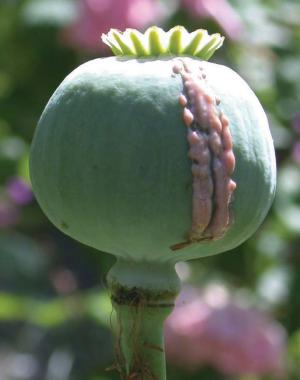
You would be surprised how often I get asked 'so is there some sort of bug or something that will make you high?'. The truth is most things that make you high (at least the ones known to science) are probably well known by those people already.  Papaver somniferum or the opium poppy is the king of all making you high organisms. It has been used at least since ancient Egyptian times for pain relief ans to help people sleep. In ancient Greece it was also used for its hallucinogenic properties.


It has a rather striking appearance bearing bright red petals with a contrasting black base. Don't let the innocent looking flowers fool you, because it really packs a punch. This plant contains all kinds of highly addictive chemicals such as Heroin, Morphine and Codine. The illegal substance Opium is a combination of chemicals present in the dried latex of the opium bulbs.
Poppies themselves are a large genus and the poppy used in remembrance day is not the opium poppy but Papaver rhoeas, a common agricultural weed in Europe. The origin of this comes from a poem for a fallen friend by the WW1 Canadian military Physician John McCrae.

Distribution:
The native range of the Opium poppy is hard to determine as it has been widely cultivated for a long time. It most likely originates from the middle east or Southern Europe but it now 
ooccurs both as a cultivated crop and Iin the wild in many parts of the world.

Classification:
Kingdom: Plantae
Phylum: Angiosperms
Class: Dicotyledon
Order: Ranunculales
Family: Papaveraceae
Genus: Papaver
Species: Papaver somniferum

Image Links: