Showing posts with label Lepidoptera. Show all posts

Monday, 7 September 2015

Creature 342: Harrisimemna trisignata


Taking headbutting to a new level.
Harrisimemna trisignata is a moth commonly called Harris' three spot caterpillar or Harris' three spot moth.

The juvenile has found a pretty innovative use for the head from their previous malts. Instead of discarding them like most caterpillars would, they hang onto them and use them as a weapon.
Meet the Ugly Caterpillar That Uses Old, Dead Heads as Weapons and Can’t Tell Its Butt From Its Head


Distribution:
The species is found across the east and center of North America.

Classification:
Kingdom: Animalia
Phylum: Arthropoda
Class: Insecta
Order: Lepidoptera
Family: Noctuidae
Genus: Harrisimemna
Species: Harrisimemna trisignata

Image Links:

Tuesday, 18 August 2015

Creature 322: Battus philenor


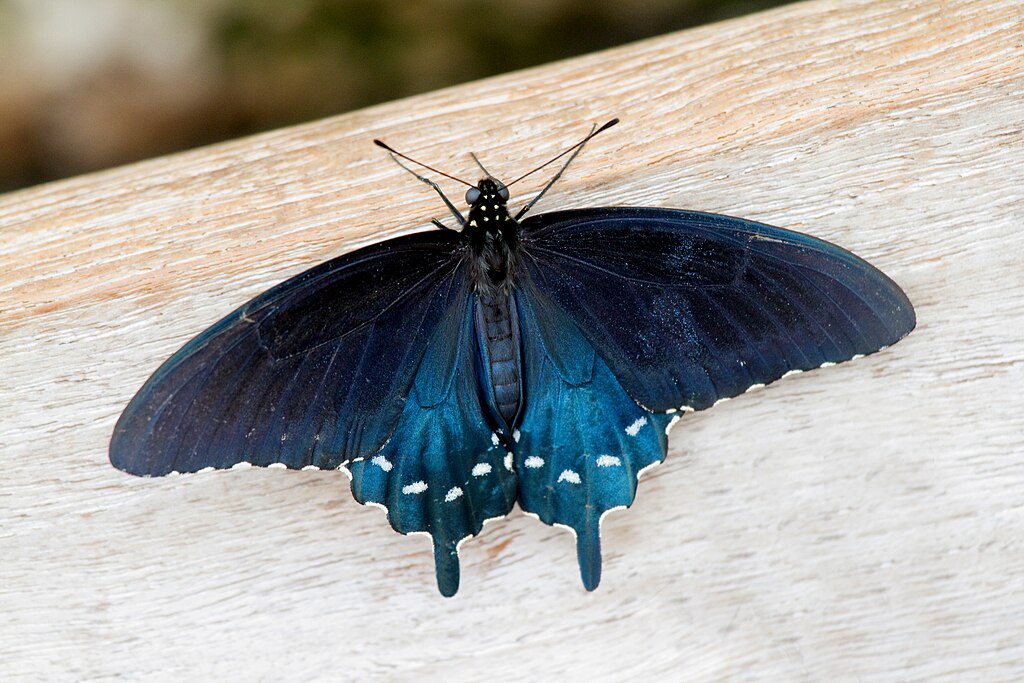
Battus philenor is sometimes called the pipevine caterpillar or swallowtail caterpillar.


The adult looks pretty cool, but take a look at the caterpillar.

Pipevine Swallowtail (Battus philenor) caterpillar

As caterpillars they feed on the toxic plants Aristolochia and the poison accumulates in their body providing them with a chemical defence.


Distribution:
Battus philenor is known from North and Central America.

Classification:
Kingdom: Animalia
Phylum: Arthropoda
Class: Insecta
Order: Lepidoptera
Family: Papilionidae
Genus: Battus
Species: Battus philenor

Image Links:

Friday, 14 August 2015

Creature 318: Calyptra

Blood sucking moth

Calyptra is a genus of moth, several species of which are known as the vampire moths.

Calyptra thalictri 01.jpg
They earned this name through their habit of actively seeking out and drinking the blood of vertebrates, including humans. They use their tube like proboscis to pierce the skin and take their fill.

Photo of vampire moth

Distribution:
Calyptra is mostly found in South and East Asia, but can be found all of Eurasia and some parts of North America.

Classification:
Kingdom:Animalia
Phylum:Arthropoda
Class:Insecta
Order:Lepidoptera
Family:Erebidae
Genus: Calyptra

Image Links:

Friday, 22 May 2015

Creature 234: Hemeroplanes triptolemus

A caterpillar that knows how to bluff


Hemeroplanes triptolemus is a Hawk moth, like the hummingbird Hawk Moth which is in another post. The Hawk Moth's defensive trick is that it mimics a small snake. 

When it feels threatened it inflates its head. Shiny scales on the side of their head reflect light making it look like a snake. These guys would be amazing poker player, because when a predator isn't buying, instead of trying to cringe or flee for their life they double down. They lunge forward and pretend to strike their predators. If the predator gets hit, it doesn't harm them at all, it is just a very brave bluff. In some ways it is similar in appearance to Papilio troilus, which is probably adopting the same strategy.

The adult is a less interesting looking nectar feeding moth.


Distribution:
Hemeroplanes triptolemus is known from Central and tropical South America.

Classification:
Kingdom: Animalia
Phylum: Arthropoda
Class: Insecta
Order: Lepidoptera
Family: Sphingidae
Genus: Hemeroplanes
Species: Hemeroplanes triptolemus

Image Links:

Sunday, 17 May 2015

Creature 229: Brahmaea


Crazy moth

Brahmaea is a genus of moth commonly called the Brahmin moth, or as a juvenile the Brahmin moth caterpillar.


The adults have some kind of psychedelic pattern which hypnotizes you if you stare at it too long. I used to wonder why venomoth could do psychic moves until I learnt about this moth. But all that is nothing compared to what the juvenile has going on:


I don't think we have figured out what those structures are for, but they do give it a bizarre appearance.

Distribution:
Brahmaea have an oriental distribution meaning they are found in a East and South East Asia including the South East Asian Islands as well as the Subcontinent.

Classification:
Kingdom: Animalia
Phylum: Arthropoda
Class: Insecta
Order: Lepidoptera
Family: Brahmaeidae
Genus: Brahmaea

Image Links:

Wednesday, 6 May 2015

Creature 218: Isochaetes beutenmuelleri

A crystal caterpillar
Description:
Isochaetes beutenmuelleri is a moth which is commonly called the spun glass slug moth or the spun glass caterpillar in its juvenile phase.

As a caterpillar or a pupa it looks like it is made of glass. These caterpillars are poisonous stinging caterpillars,  so don't try to pick them up.


The adult looks pretty much like an ordinary brown moth, albeit quite a hairy one.


Distribution:
Isochaetes beutenmuelleri are found throughout most of the United States but are absent from the West.
Classification:
Kingdom: Animalia
Phylum: Arthropoda
Class: Insecta
Order: Lepidoptera
Family: Limacodidae
Genus: Isochaetes
Species: Isochaetes beutenmuelleri

Image Links:

Tuesday, 14 April 2015

Creature 196: Calcarifera ordinata


A cool looking caterpillar
Description:
Calcarifera ordinata is a species of moth. The adult has no common name that I am aware of but the juvenile is known as a wattle cup caterpillar.

The adult is mostly light brown with a few cool markings, but nothing to write a blog post about.
The juvenile looks a lot more interesting.  It is covered in a variety of fine colour markings. It also carries four pairs of thorn like protrusions covered in stinging setae. These setae are venomous and being stung by one of these guys is apparently far worse than your average wasp.


Distribution:
Calcarifera ordinata is mostly found in the Australian tropics with a little overflow into the temperate region.

Classification:
Kingdom: Animalia
Phylum: Arthropoda
Class: Insecta
Order: Lepidoptera
Family: Limacodidae
Genus: Calcarifera
Species: Calcarifera ordinata

Image Links:

Friday, 3 April 2015

Creature 185: Galleria mellonella

A moth with a high pitched voiced
Description:
Galleria mellonella is a moth which is known as the Greater wax moth or the honeycomb moth.

One of their main predators are insectivorous bats. Unfortunately for the moths, they use high pitched sounds to call for mates and bats can be pretty good at hearing high pitched sounds. This has led to a co-evolutionary arms race in which the moths produce higher and higher pitched noises as the bats learn to hear higher and higher pitched sounds. This has led to the moth being able to pick up sounds of up to 300 kHz.  The human ear is only capable of picking up sounds of up to 23 kHz.
These moths feed off honeycombs as juveniles and have become a significant agricultural pest.


Distribution:
Greater wax moths are probably indigenous to Europe an Northern Asia but have been introduced almost everywhere in the world.

Classification:
The greater wax moth is the only member of the genus Galleria, with the lesser wax moth belonging to a closely related genus.

Kingdom: Animalia
Phylum: Arthropoda
Class: Insecta
Order: Lepidoptera
Family: Pyralidae
Genus: Galleria
Species: Galleria mellonella

Image Links:

Monday, 2 March 2015

Creature 153: Greta oto

This butterfly just has to be different

Description:
Greta oto is a species of butterfly which in English is referred to as a Glass winged butterfly. It gets its name from its unusually transparent wings.

Most butterflies are known from their brightly colored wings,  which are a result of a multitude of tiny scales. The glass winged butterfly decided it wanted to be different and lacks the scales present on other butterflies except around the edges. Most insect wings are fairly transparent, but dense venation and the fact that you usually on see them when they folded over the abdomen give them a translucent appearance. The glass butterfly looks unusual because you can easily see straight through its wings.

Glass winged butterflies lay their eggs on toxic nightshade plants. Their caterpillars have a tolerance to the poison which accumulates in their tissue making them poisonous and protecting them from predators. Adult males use the poison to produce pheromones. When they are ready to breed several males gather together and release pheromones together increasing the chance of female encountering the group. The males in the group will then compete with each other to get the attention of the females. This behavior is known as lekking.

Distribution:
Glass winged butterflies are endemic to Central America and Southern United States.

Classification:
Kingdom: Animalia
Phylum: Arthropoda
Class: Insecta
Order: Lepidoptera
Family: Nymphalidae
Genus: Greta
Species: Greta oto

Image Links:

Tuesday, 23 December 2014

Creature 84: Phengaris arion

The caterpillar who would be queen of the ants.

This is part 1 one 2 in a weird three way coevolution story. When people think of Bizarre creatures they do not normally think of Europe, but there are some weird enough things that go on up there.

Description:  Phengaris arion just looks like a large blue butterfly and is rather boringly named the Large Blue Butterfly. Apart from the fact that it may look pretty, it does not appear to be very interesting. It is their reproductive strategy that is really interesting. Female Large Blue Butterflies lay their eggs near the nests of genus Myrmica a fairly unremarkable group of ants. After the eggs of the Large Blue Butterfly have hatched the caterpillar begins emitting pheromones that mimic the larvae of ants from the Mytmica genus. When the  ants find the deceptive caterpillar they give it a free lift back to the nest and store it in the chamber with the rest of the ant larvae. This is a very dangerous place to be for any caterpillar as there is nothing ants like more than tearing apart caterpillars and grubs for food. Once in the nest the caterpillar starts to mimic the queen ant with both its pheromones and the noises it emits. This tricks the ants into keeping it well fed and will, in their confusion, sometimes even kill some of their own larvae to keep it fed. Sometimes the greedy caterpillar will take a sneaky munch of the larvae themselves. When the caterpillar becomes an adult it leaves the ants nest and flies away.

This strategy is far from perfect. The ants have been evolving more and more complex pheromone cues discover the intruders. When there is a living queen present in the nest the ants are much more likely to spot the subterfuge. If the wrong species of ant pick up the juvenile, discovery is almost certain. As you can imagine for the caterpillar failure to convince the ants will result in a painful death as their flesh is hacked off in small chunks and eaten by dozens of different ants.


If the trick works than the caterpillar has just found a way of getting fed without any effort. What's more it has an army willing to die defending it in an underground tunnel which they built which makes the caterpillar nice and safe from predators.  Or does it?

Read tomorrow's post in which host-parasite coevolution really starts to get messy.

 To be continued........................

Distribution:
Phengaris arion  is found throughout the Palaerctic region.

Classification:
Phengaris arion was previously known as Maculinea arion but the genus has been changed for reasons best left to Lepidopterists.
Kingdom: Animalia
Phylum: Arthropoda
Class: Insecta
Order: Lepidoptera
Family: Lycaenidae
Genus: Phengaris
Species: Phengaris arion

Image Links:

Wednesday, 1 October 2014

Creature 1: Papilio troilus

This has to be the very Hungry Caterpillar

O.k. this is my first post on this blog. I have a large list of bizarre creatures to include on this blog, and I am selecting them semi-randomly and I am sort of glad that this is the first one that came up.
Description:
It's species name is Papilio troilus. It is a species of butterfly, but it is really the juvenile that has earned the species its place on this blog. This is a typical case of mimicry which the Lepidopterans seem to be so good at. But take a look at the result:


Its mimicry follows three phases. In the first few instars it exhibits a darker colour, apparently mimicking bird droppings.
As it develops into its later instars it becomes more green and develops its unusual markings, mimicking the snake Dendrelaphis punctulata. It looks a little like a sock puppet to me. The part which resembles a face is actually  the thorax, its small head is discreetly tucked underneath this elaborate display.
As an adult it is mimicking another butterfly (Battus philenor), which is unpalatable to most of its predators.

Distribution:
Papilio troilus is endemic to the South East of the United states, with most individuals coming from in and around the Florida peninsula.
Classification: 
Kingdom: Animalia
Phylum: Arthropoda
Class: Insecta
Order: Lepidoptera
Family: Papilionidae
Genus:  Papilio
Species: Papilio troilus

Image links: 
http://caterpillarblogger.blogspot.com.au/
http://photographyblogger.net/18-bug-eye-pictures-that-will-blow-your-mind/
http://bugguide.net/node/view/328541
http://en.wikipedia.org/wiki/Papilio_troilus#mediaviewer/File:Papilio_troilus_Linne_(1).jpg