Showing posts with label Strange Looking. Show all posts

Tuesday, 8 September 2015

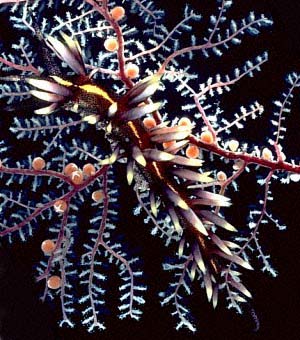
Creature 343: Protaeolidiella atra


Nudibranch day

Just another nudibranch for again for you today.

This time it's Protaeolidiella atra, whose bizarre branching appendages form part of its digestive sy

Distribution:
Protaeolidiella atra is found in the Indowest Pacific.

Classification:
Kingdom: Animalia
Phylum: Mollusca
Class: Gastropoda
Order: Nudibranchia
Family: Aeolidiidae
Genus: Protaeolidiella
Species: Protaeolidiella atra

Image Links:

Monday, 7 September 2015

Creature 342: Harrisimemna trisignata


Taking headbutting to a new level.
Harrisimemna trisignata is a moth commonly called Harris' three spot caterpillar or Harris' three spot moth.

The juvenile has found a pretty innovative use for the head from their previous malts. Instead of discarding them like most caterpillars would, they hang onto them and use them as a weapon.
Meet the Ugly Caterpillar That Uses Old, Dead Heads as Weapons and Can’t Tell Its Butt From Its Head


Distribution:
The species is found across the east and center of North America.

Classification:
Kingdom: Animalia
Phylum: Arthropoda
Class: Insecta
Order: Lepidoptera
Family: Noctuidae
Genus: Harrisimemna
Species: Harrisimemna trisignata

Image Links:

Saturday, 5 September 2015

Creature 340: Sula


Sula is a genus of six species of birds.


The cammon name for these bizarre looking bird is booby. Boobys look like they should be in a comedy with their awkward appearance and their feet which dramatically contrast in color. They are large birds with some species nearly reaching 1 meter tall. on some islands like the galapogas boobies don't display much fear and like the dodo were used by sailors as easy meals.
<p>Photo: A red-footed booby on a tree branch</p>


Distribution:
Various species of boobies can be found throughout the world's tropical coastal areas, but they are most diverse in the East Pacific.

Classification:
Kingdom: Animalia
Phylum: Chordata
Class: Sauropsida
Order: Suliformes
Family: Sulidae
Genus: Sula

Image Links:

Thursday, 3 September 2015

Creature 338: Dracorex hogwartsia


The dragon king of hogwarts
Dracorex hogwartsia is a recognised dinosaur species which has been recently (2006) described.
The Childrens Museum of Indianapolis - Dracorex skeletal reconstruction.jpg

It is the only species in the genus Dracorex, meaning dragon king. The specific epithet hogwartsia is a tribute to the Harry Potter series. Its spiky head and long muzzle probably gave it a dragon-like appearance.

DracorexHogwartsia02
The name might be pretty cool, but it may not exist forever.  Some scientists believe they it is not a separate genus or species but that it is the juvenile form of a species of Pachycephalosaurus. Apparently the bizarre horns and bumps on the head changed quite dramatically as the dinosaur matured. I have no idea which hypothesis is correct.

Distribution:
The only fossil which has ever been uncovered was found in South Dakota and is from the late Cretaceous.

Classification:
Kingdom:Animalia
Phylum:Chordata
Class: Sauropsida
Order: Ornithischia
Family:Pachycephalosauridae
Genus:Dracorex
Species: Dracorex hogwartsia

Image Links:
Wednesday, 2 September 2015

Creature 337: Trychopeplus laciniatus


Impressive camouflage

Trychopeplus laciniatus is a stick insect commonly known as the moss mimic walking stick.

This species blends in to the moss that grows on trees in the dense rainforest that they live in. I think it is a pretty impressive camouflage. The intricate structures on the outside are just part of the insects exoskeleton which has grown into all kinds of weird and wonderful shapes.

Trychopeplus laciniatus L2.2

Distribution:
Moss mimic walking sticks are found in Costa Rica.

Classification:
Kingdom: Animalia
Phylum: Arthropoda
Class: Insecta
Order: Phasmatoidea
Family: Diapheromeridae
Genus: Trychopeplus 
Species: Trychopeplus laciniatus

Image Links:
http://entomologydiary.typepad.com/home/trychopeplus-laciniatus-phasmatodea-diapheromeridae.html
http://gallery.kunzweb.net/main.php?g2_itemId=20267

Monday, 31 August 2015

Creature 335: Myzopoda


Myzopoda are a genus of bats commonly known as old-world sucker foot bats.

Sucker-Footed Bat

Like the South American sucker foot bats they have tiny suction pads on their wrists and ankles which enables them to latch onto objects, even smooth surfaces. However they are so distantly related from any other bats in that they have been given their own family. They are the most basal genus in their subfamily Noctilionoidea.


Distribution:
The genus only exists in Madagascar, but fossil evidence indicates they once existed in Africa.

Classification:
Kingdom: Animalia
Phylum: Chordata
Class: Mammalia
Order: Chiroptera
Family: Myzopodidae
Genus: Myzopoda

Image Links:
http://www.supremelists.com/top-10-weird-looking-creatures
http://bats.mampam.com/madagascar/images/myzopoda/pages/36_jpg.htm

Thursday, 27 August 2015

Creature 331: Opisthoproctidae


Fish with a transparent head

Opisthoproctidae are a weird family of fish commonly known as Barreleye fish or Spook fish.


This is probably due to the bizarre adaptations to their eyes which they need for the dark areas on the depths of the ocean in which they live. They have enormous eyes with massive lenses which usually face upward but can be rotated to face forward if they want to change their field of view. Their dome shaped head is transparent in order to refract light into their massive eyes.

Distribution:
Opisthoproctidae can be found in all the world's oceans at depths of 400-2,500m

Classification:
Kingdom: Animalia
Phylum: Chordata
Class: Actinopterygii
Order: Argentiniformes
Family: Opisthoproctidae

Image Links:
http://pyramidbeach.com/2010/10/20/macropinna-microstoma/

Wednesday, 26 August 2015

Creature 330: Nidulariaceae


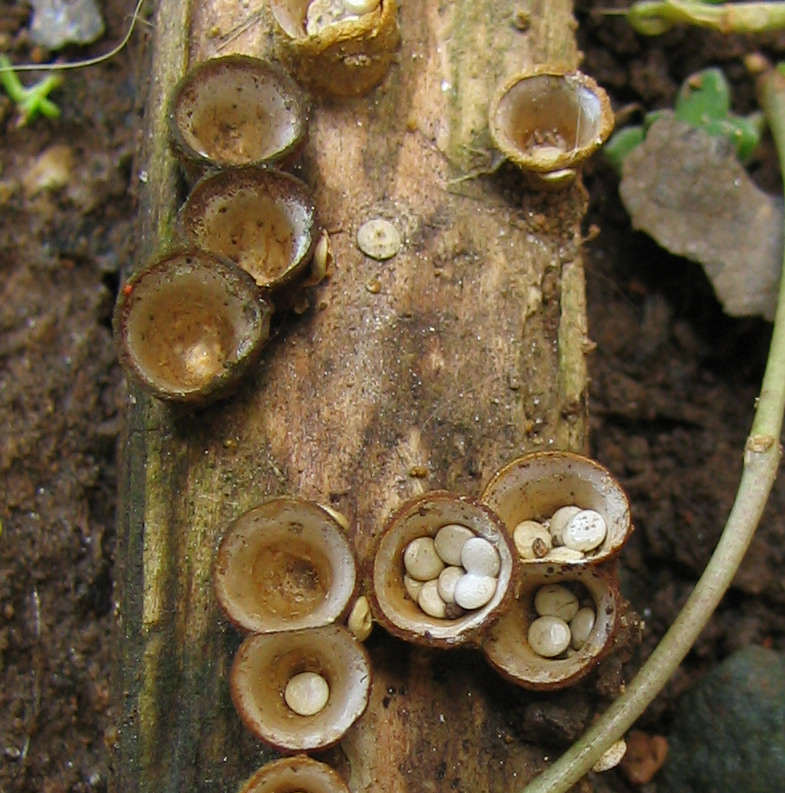
Bird's nest fungus

Nidulariaceae is called the bird's nest fungus, because it sort of looks like a birds nest with eggs in it.

The little 'eggs' contain spores which are supposed to be eaten by animals and spread over large 
distances. They get a but of a helping hand when it rains as the cup has a special shape which projects
 the spore packets up to 1 meter away when a raindrop falls in and splashes. Sometimes tiny sticky
 threads will be attached to the spores and will wrap around bits of vegetation which it comes in contact 
with.

Bird's nest fungi - context.jpg

Distribution:
The family is cosmopolitan.

Classification:
Kingdom: Fungi
Phylum: Basidiomycota
Class: Agaricomycetes
Order: Agaricales
Family: Nidulariaceae

Image Links:

Sunday, 23 August 2015

Creature 327: Catacanthus incarnatus


Bug with a man's face
Catacanthus incarnatus is commonly called the manfaced bug or the manfaced beetle. Manfaced bug is a better name because it is not a beetle at all, but is a true bug.
Catacanthus Incarnatus , man, face, beetle, real, framed, insect, display, tribal, art
It earned its name from the wierd patterns on the dorsum which resembles a man's face.

Distribution:
Catacanthus incarnatus is found in Southeast Asia and the Indian subcontinent.

Classification:
Kingdom: Animalia
Phylum: Arthropoda
Class: Insecta
Order: Hemiptera
Family: Pentatomidae
Genus: Catacanthus
Species: Catacanthus incarnatus

Image Links:

Wednesday, 19 August 2015

Creature 323: Scutellinia scutellata


Fungus with eyelashes

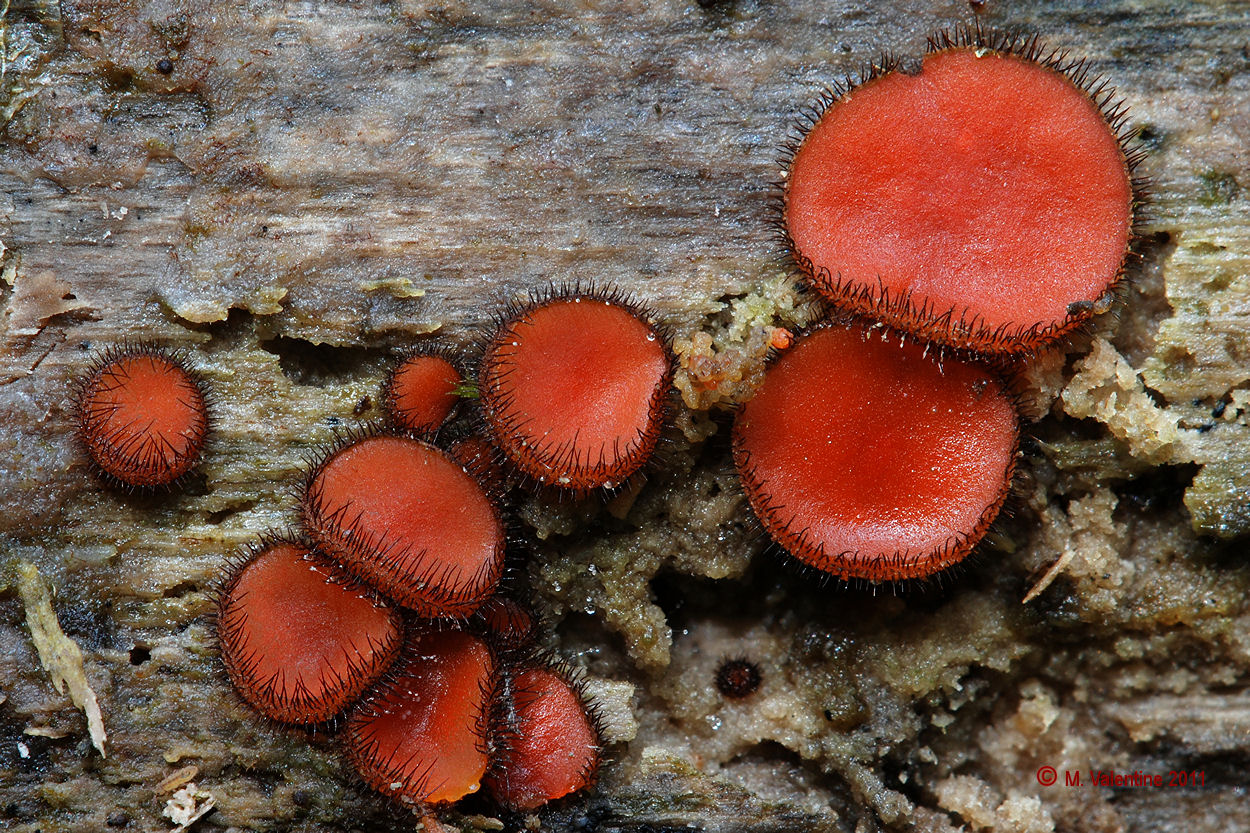
Scutellinia scutellata is a fungus.

03_Eyelash_Fungus_-_Scutellinia_scutellata

I chose this one because of the weird eyelash like structures that grow on its fruiting bodies. Again there is not much to this one except its bizarre appearance.

Two orangish-red colored, cup-shaped structures with dark-brown eyelashes growing on the outer rim. The two structures are sitting next to each other, growing on a piece of wood.

Distribution:
Eyelash cup fungus is very widespread. It is common in Europe and North America but can be found throughout South America, Asia and also in Afica and Melanesia.

Classification:
Kingdom: Fungi
Phylum: Ascomycota
Class: Pezizomycetes
Order: Pezizales
Family: Pyronemataceae
Genus: Scutellinia
Species: Scutellinia scutellata

Image Links:

Tuesday, 18 August 2015

Creature 322: Battus philenor


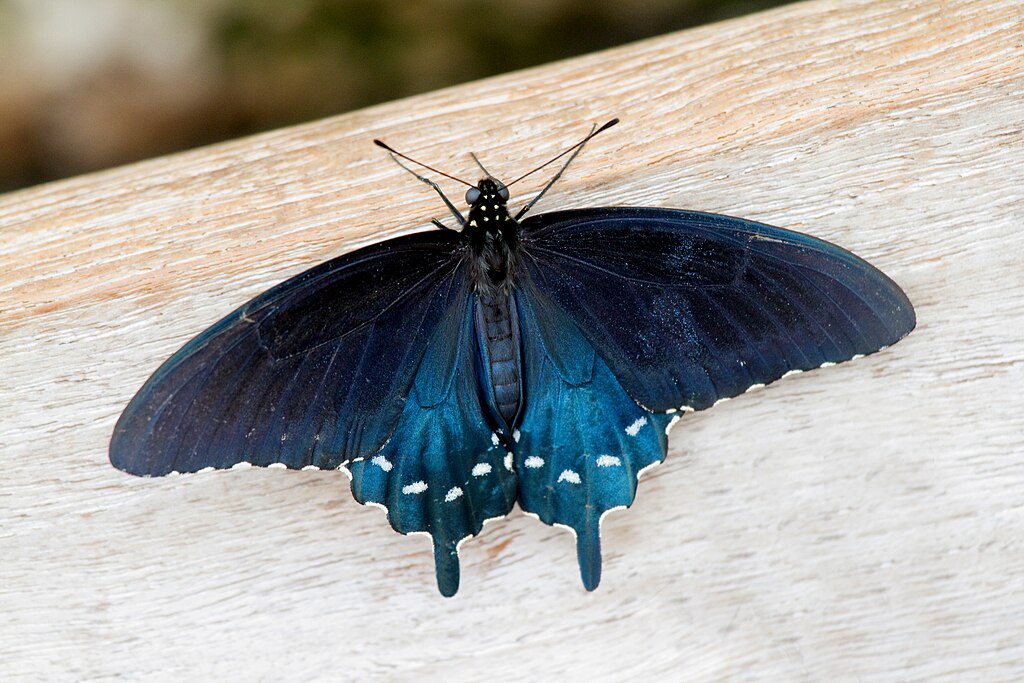
Battus philenor is sometimes called the pipevine caterpillar or swallowtail caterpillar.


The adult looks pretty cool, but take a look at the caterpillar.

Pipevine Swallowtail (Battus philenor) caterpillar

As caterpillars they feed on the toxic plants Aristolochia and the poison accumulates in their body providing them with a chemical defence.


Distribution:
Battus philenor is known from North and Central America.

Classification:
Kingdom: Animalia
Phylum: Arthropoda
Class: Insecta
Order: Lepidoptera
Family: Papilionidae
Genus: Battus
Species: Battus philenor

Image Links:

Sunday, 16 August 2015

Creature 320: Parotia sefilata


Cool dance

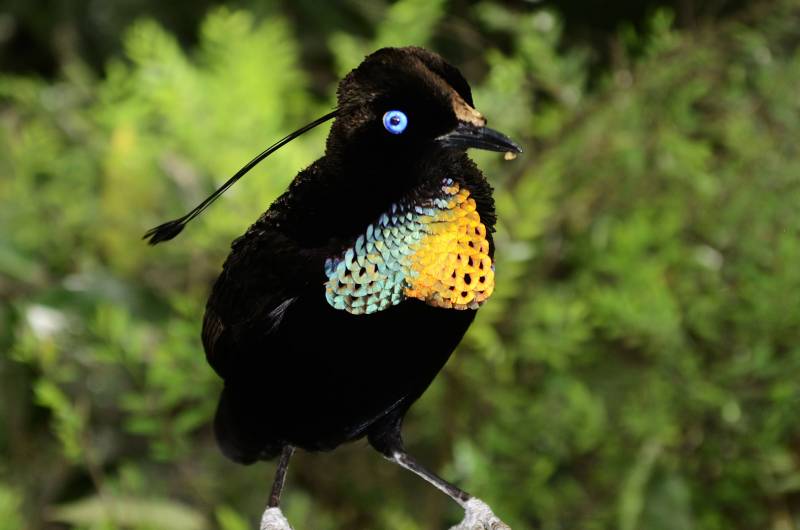
Parotia sefilata is a bird commonly known as the Western Parotia.

My profile


They are one of those species of birds in which the males go out of their way to attract the females, and their colour patterns can be pretty cool, but you should see them dance.


Distribution:
The Western Parotia is only found in Western New Guinea.

Classification:
Kingdom: Animalia
Phylum: Chordata
Class: Sauropsida
Order: Passeriformes
Family: Paradisaeidae
Genus: Parotia
Species: Parotia sefilata

Image Link:
http://www.listal.com/viewimage/8452226

Video Link:
https://www.youtube.com/watch?v=EZF_IbizDzw

Saturday, 15 August 2015

Creature 319: Astropecten articulatus


Easy one

I have been publishing a lot of lazy posts lately because I am very close to submitting my PhD thesis. Today is no exception.
Purple and Orange Starfish on the Beach (2884079538).jpg

Astropecten articulatus is a fairly common but cool looking Starfish.

Starfish


Distribution:
Astropecten articulatus can be found in the Carribean and along the East coast of the United States and South America as far south as Brazil.

Classification:
Kingdom: Animalia
Phylum: Echinodermata
Class: Asteroidea
Order: Paxillosida
Family: Astropectinidae
Genus: Astropecten
Species: Astropecten articulatus

Image Links:

Wednesday, 12 August 2015

Creature 316: Trichobatrachus robustus

Hairy frog

Trichobatrachus robustus is known as the hairy frog or the wolverine frog.


It's a largish frog with hair-like structures towards the posterior. So what are they for? the structures are filled with blood vessels which absorb oxygen. They are basically like land gills. They also have bone-like structures which grow out of their hands earning their name the wolverine frog.


Distribution:
The hairy frog is from Central Africa.

Classification:
Kingdom: Animalia
Phylum: Chordata
Class: Amphibia
Order: Anura
Family: Arthroleptidae
Genus: Trichobatrachus
Species: Trichobatrachus robustus

Image Links:
https://en.wikipedia.org/wiki/Hairy_Frog
http://www.sciencedaily.com/releases/2008/06/080623125003.htm

Tuesday, 11 August 2015

Creature 315: Peristeria elata

Another Orchid

It's about time I had another lazy day, so let's have another orchid. Today it is Peristeria elata.

It is commonly known as the dove orchid, because it sort of looks like a dove.


Distribution:
The dove orchid is native to central America and South America above the equator.

Classification:
Kingdom: Plantae
Phylum: Angiosperms
Class: Monocotyledon
Order: Asparagales
Family: Orchidaceae
Genus: Peristeria
Species: Peristeria elata

Image Links:
https://en.wikipedia.org/wiki/Peristeria_elata
https://featuredcreature.com/6-amazing-orchids-that-look-just-like-animals/

Sunday, 9 August 2015

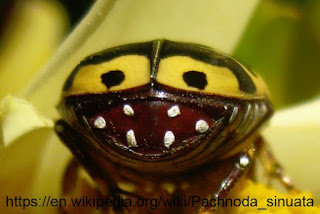
Creature 313: Pacnoda sinuata

Smart-arse

Pacnoda sinuata  is  one of tens of thousands of species of scarabid beetles. It can be called the brown and yellow fruit chafer.

So what is so special about this one, check out the color patters from behind:


This is probably some sort of mimicry, although exactly what it is supposed to be mimicing is not known.


Distribution:
Pacnoda sinuata can be found in Southern Africa and is a common garden insect in its natural range.

Classification:
Kingdom: Animalia
Phylum: Arthropoda
Class: Insecta
Order: Coleoptera
Family: Scarabidae
Genus: Pacnoda 
Species: Pacnoda sinuata

Image Links:
http://www.biolib.cz/en/image/id24393/
https://en.wikipedia.org/wiki/Pachnoda_sinuata

Friday, 7 August 2015

Creature 311: Chiasognathus grantii

A strong jawline

Chiasognathus grantii is a beetle commonly called the Chilean stag beetle.

The males use their jaws to fight during mating season and their jaws are ready for the job. During combat they lift their opponent and throw them. As they search for mates on top of large trees this can be a huge setback for the male beetles. The females don't need the huge mandibles so they don't have them.


Distribution:
Chiasognathus grantii is found in the Patagonian region of Argentina and Chile.

Classification:
Kingdom: Animalia
Phylum: Arthropoda
Class: Insecta
Order: Coleoptera
Family: Lucanidae
Genus: Chiasognathus
Species: Chiasognathus grantii

Image Links:
https://en.wikipedia.org/wiki/Chiasognathus_grantii
http://museum.unl.edu/research/entomology/Guide/Scarabaeoidea/Lucanidae/LUC/CHIA/grantii.html

Thursday, 6 August 2015

Creature 310: Pterois

Alright, I get it

Pterois is a genus of 11 species of fish I know as zebrafish, but according to Wikipedia they can also be called lionfish, turkeyfish, firefish and butterfly cod.


All species are poisonous, and they want everyone to know it. They have dramatic flamboyant warning coloration just to make that perfectly obvious. Just in case the coloration didn't tip you the rays on their fins are ridiculously elongate which definitely says don't even try to eat me.


Distribution:
Pterois is found in the Indo-Pacific.

Classification:
Kingdom: Animalia
Phylum: Chordata
Class: Actinopterygii
Order: Scorpaeniformes
Family: Scorpaenidae
Genus: Pterois

Image Links:
https://en.wikipedia.org/wiki/Pterois
http://galleries.clickbelow.co.nz/displayimage.php?album=15&pos=4

Monday, 3 August 2015

Creatures 307: Erpeton tentaculatum

A snake with a mustache

 Erpeton tentaculatum is called the tentacled snake because of the two tentacle like structures which look like a mustache on their face.

They are ambush predators, burying themselves in the mud and waiting for their prey to swim by The bizarre structure helps detect when their prey is swimming by. They spend their whole life in the water and can spend up to 30 minutes underwater. They are hatched from their eggs before the eggs have been laid.


Distribution:
It is found in South-east Asia.

Classification:
Kingdom: Animalia
Phylum: Chordata
Class: Sauropsida
Order: Squamata
Family: Colubridae
Genus:  Erpeton
Species:  Erpeton tentaculatum

Image Links:
https://en.wikipedia.org/wiki/Erpeton_tentaculatum
http://thebrackishtank.tumblr.com/image/110107311505

Sunday, 2 August 2015

Creature 306: Psychotria elata

A flower that looks like lips
Psychotria elata is flowering plant sometimes known as the hot lips plant or the hooker's lips.

The reason for this unusual name is the strange appearance of the floral bracts as the flower is developing. They look like a heavily lipsticked set of human lips. When the floral bracts open the flower looks like this.

Distribution:
Psychotria elata can be found in rain forest habitats of central and south America.

Classification:
Kingdom: Plantae
Phylum: Angiosperms
Class: Dicotyledon
Order: Gentianales
Family: Rubiaceae
Genus: Psychotria
Species: Psychotria elata

Image Links: